
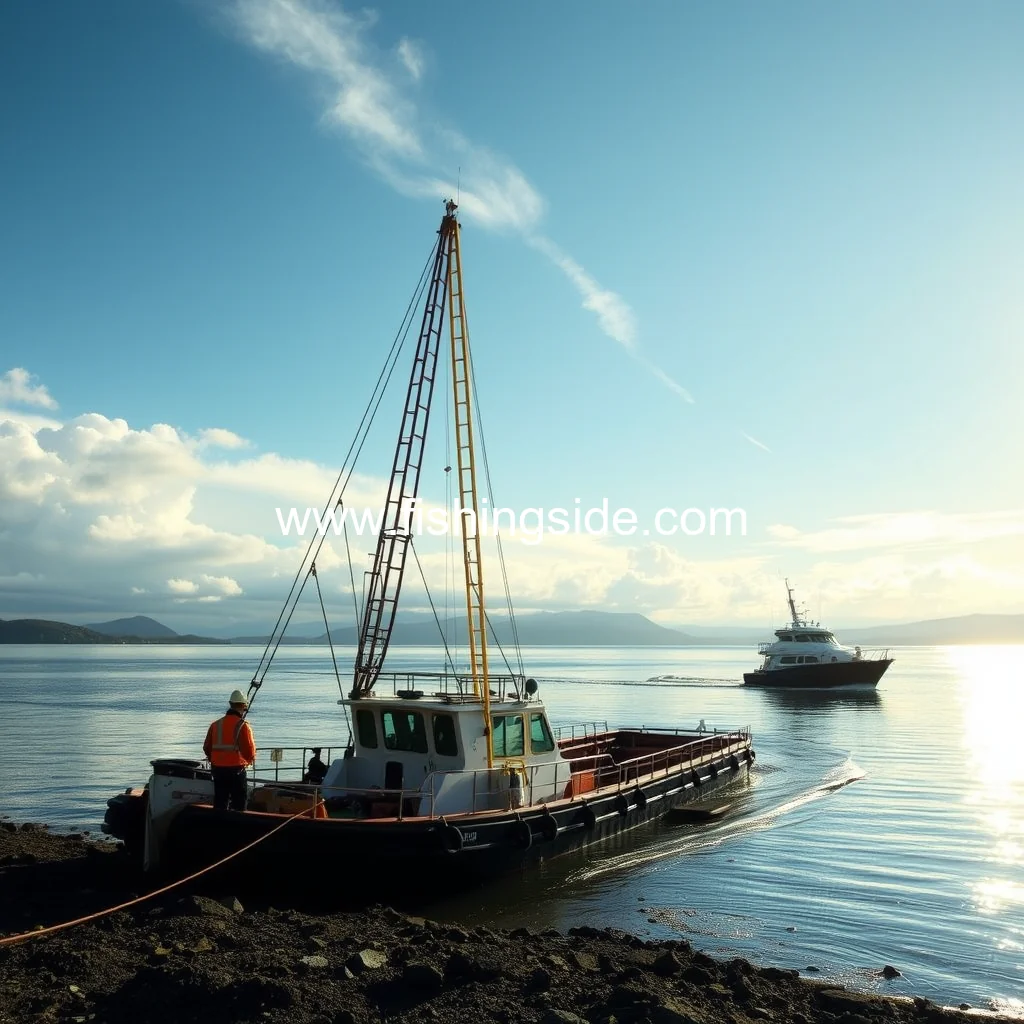
The Decline of Scallop Populations in Coromandel Bay
The recent reports of the lowest scallop numbers in Coromandel Bay have raised concerns among local fishermen and environmentalists. This alarming situation has prompted Fisheries New Zealand to defend its management strategies, emphasizing the importance of long-term sustainability. Historical Context
- Scallop populations have been monitored for decades, showing fluctuations due to various environmental and human factors. The current low numbers are unprecedented, signaling a potential crisis in the bay’s ecosystem. * Fisheries New Zealand’s Response
- The agency has implemented a series of measures aimed at understanding and mitigating the decline. These actions include comprehensive research, habitat restoration, and stricter fishing regulations. * Impact on Local Fishermen
- The decrease in scallop numbers has led to reduced catches and economic strain for the fishing community. Fishermen are advocating for immediate action to prevent further depletion of the resource. * Environmental Concerns
- Scientists warn that the decline could be indicative of broader ecological issues, such as water pollution or climate change. The health of Coromandel Bay’s marine life is crucial for maintaining biodiversity and ecological balance.
Closure of Fishing Zones
The New Zealand Sport Fishing Council has announced the closure of several key fishing zones due to a significant decline in scallop populations. This decision impacts the east Northland waters, the Hauraki Gulf, Coromandel, and Bay of Plenty regions. Reason for Closure:
- Insufficient scallop numbers to sustain harvest
- Protection of marine ecosystem
Impact on Fishing Communities
The closure of these areas has a profound effect on both commercial and recreational fishing communities.
The Decline of Scallops in the Coromandel Beds
The Coromandel region, known for its rich marine life, has recently experienced a significant decline in scallop populations. Niwa, a leading environmental research organization, has conducted extensive camera surveys to assess the situation. The camera surveys revealed a stark decrease in scallop numbers, with very few individuals found in the local beds. Fisheries New Zealand has been studying the issue for the past three years, and their findings indicate that dredge surveys are only 70% efficient in accurately estimating scallop populations.*
The Inefficiency of Dredge Surveys
Dredge surveys, a common method used to estimate scallop populations, have proven to be less effective than previously thought.
The Decline of Tairua-Pauanui Fishery
The Tairua-Pauanui Sports Fishing Club, under the leadership of President Warren Maher, has raised concerns about the state of the local fishery. Recent activities, particularly dredging, have led to a significant decline in fish populations, pushing the ecosystem to the brink of depletion. Impact of Dredging:
- Dredging activities have disrupted the natural habitat, leading to a decrease in fish numbers. The removal of sand and silt from the riverbed has altered the water quality and sediment composition, affecting fish breeding grounds. ## Camera Surveys: A Sustainable Alternative**
Camera Surveys: A Sustainable Alternative
In response to the crisis, the club has advocated for the use of camera surveys as a more sustainable method for monitoring fish populations. Advantages of Camera Surveys:
- Non-invasive: Cameras can capture images without disturbing the fish or their habitat. Continuous Monitoring: Allows for regular observation of fish populations over time. Data Collection: Provides valuable information on fish behavior, population dynamics, and habitat use.
The Decline of New Zealand’s Coromandel Scallop Fishery
The Coromandel scallop fishery, once a thriving industry, has seen a dramatic decline in recent years. This decline has not only affected the local economy but also raised concerns about sustainability and environmental impact. * Historical Success:**
- In its heyday, the Coromandel scallop fishery boasted a fleet of 23 vessels. The industry was a significant contributor to New Zealand’s economy, with a reputation for high-quality catches. * Current Situation:
- The number of active vessels has dwindled to just four. The reduction in fleet size reflects a broader decline in scallop populations. * Environmental and Sustainability Concerns:
- Overfishing has led to a decrease in scallop populations, threatening the ecosystem’s balance. The remaining fishery faces challenges in maintaining sustainable practices. ## Lobby Group’s Call to Action**
Lobby Group’s Call to Action
LegaSea, a prominent lobby group, has taken a stand to address the crisis facing the Coromandel scallop fishery. * Government Intervention:**
- LegaSea is urging the New Zealand Government to take decisive action. The group proposes two main solutions: reducing catch limits or buying out the fishery quota.


